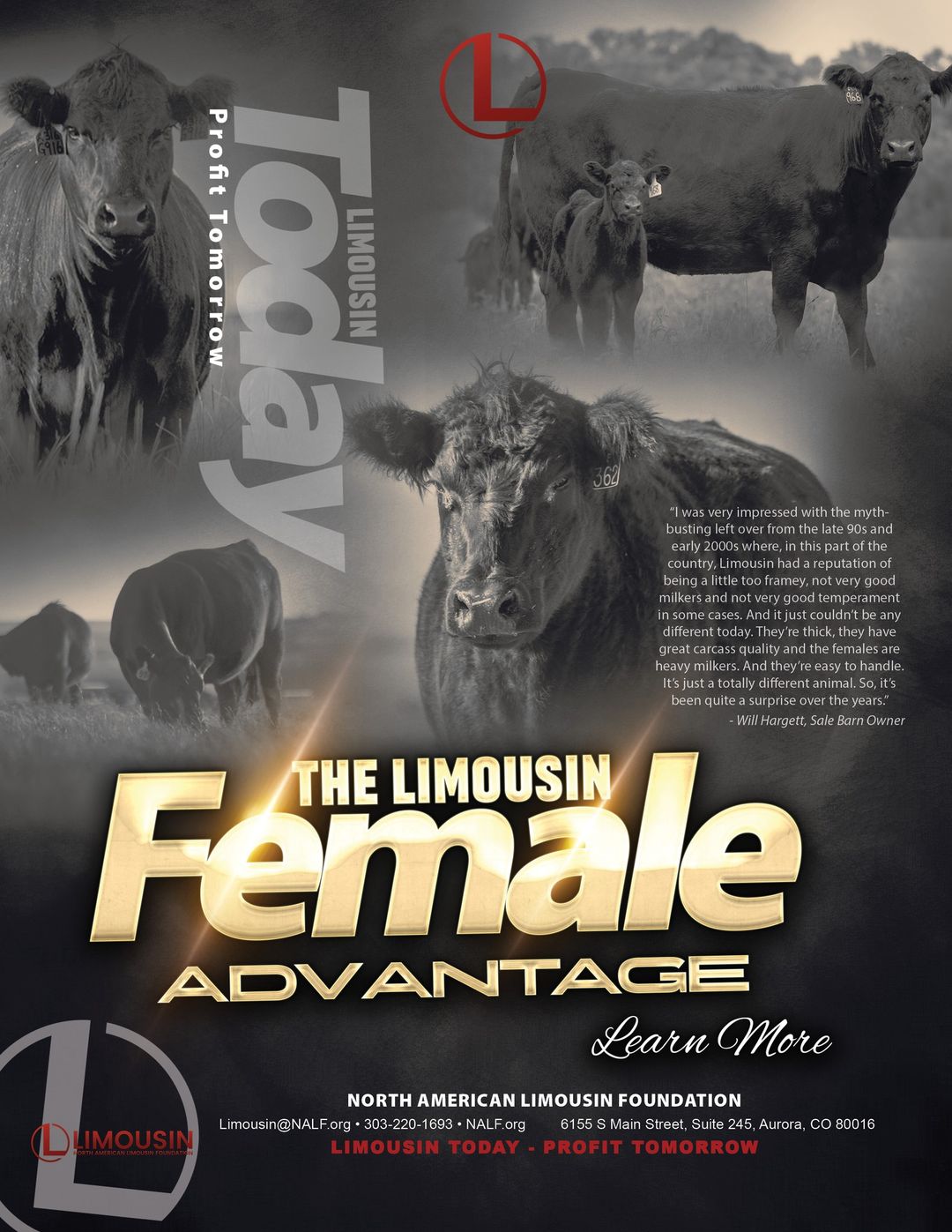

{The Limousin Female} Limousin cattle have a deep history and like many breeds, seen change along the way. More often than not, herdsires are in the spotlight for this breed’s influence. And across the board, there’s no denying the uptick of Limousin genetics in the mainstream beef industry with the popularity of Lim-Flex sires.
But it’s time to take a closer look at the Limousin female and discuss all that she brings to the table, shaping not only the breed but also the American beef industry.
As the American appetite has grown, so has the need for larger females with substantial mature weights. And while a larger mature size can be appealing due to potentially bigger calves, the Limousin cow is a textbook demonstration that moderation is key for long-term profitability. Clocking in at a moderate 1,500 pounds, the Limousin female strikes the perfect balance – a commercially viable frame and finishing weight of terminal offspring that don’t break the bank with feed costs.
“It’s so impactful…having a higher mature cow weight (because) people often know how big their calves are when they sell them,” explains Matt Spangler, beef genetics specialist at the University of Nebraska-Lincoln. That is because there is a correlation and farmers know how much feed it takes to get them to that point.
There’s a growing emphasis on maternal traits like milk production, mature size and reproductive lifespan. Spangler notes that this likely reflects producers’ recognition of rising operational costs.
Profitability requires a focus beyond just revenue. Lower costs are also essential. Breeds with a moderate size, lower feed intake and longer productive lives offer a solution.
This not only keeps heifer development costs down, but also combats cow depreciation by keeping them productive for a longer period. And more beef producers are becoming more strategic in their selection based on these cost-saving traits.
The LimFlex program has helped commercial producers leverage the power of Limousin and Angus heterosis in one neat package. These genetics have not only opened a new revenue stream for dedicated purebred Limousin breeders, but also offered commercial cattle feeders and producers the ability to experience the value of heterosis.
“The reality is the nation’s cow herd. If you look in the northern plains, that is comprised of a lot of Angus germplasm and a lot of black cows,” says Spangler. “(One of) the benefits of getting a crossbred cow is the fact that she remains in the herd for about a year and a third longer than purebred contemporaries. Then there’s also an opportunity for Limousin breeders to sell either Limousin bulls to breed Angus cows to produce F1 replacements or to sell Lim-Flex replacement bulls to produce crossbred females as replacements.”
Continue Reading here: nalf.org/blog